AI Productivity Without the Complexity
Productivity is supposed to make your work easier. AI productivity systems offer a simpler way to manage notes, tasks, calendars, and everyday work without adding another complicated app to your routine. AI productivity systems offer a simpler approach. Instead of adding another complicated tool to your routine, AI can help reduce some of the work that already takes up your time.
Why AI Productivity Systems Matter
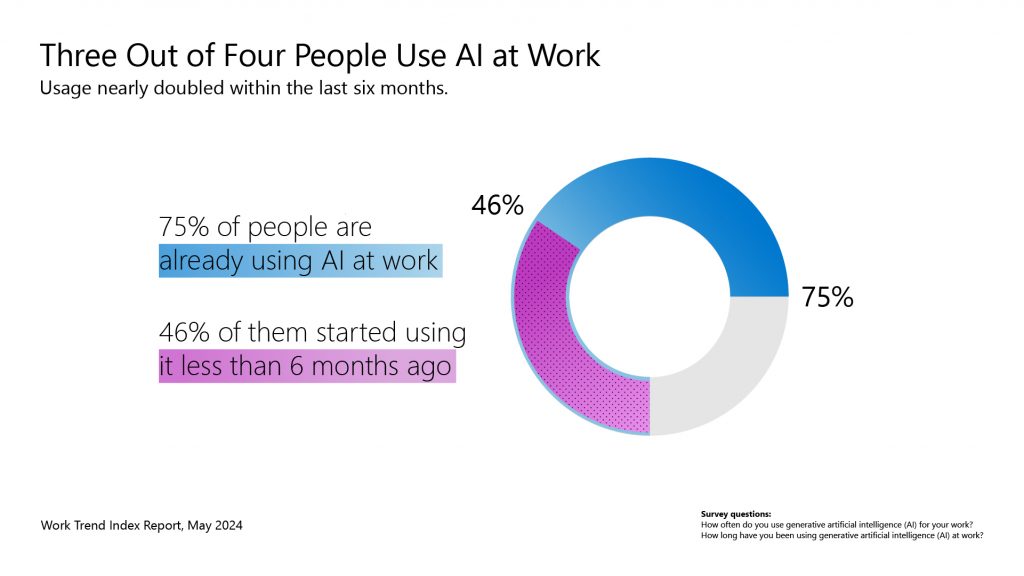
The growing use of AI at work shows why AI productivity systems are becoming relevant. Microsoft’s 2024 Work Trend Index surveyed 31,000 people across 31 countries and reported that 75% of knowledge workers were using AI. These figures describe users’ experiences rather than guaranteed productivity gains, but they show how quickly AI has become part of everyday work.
The real question is not how many AI tools someone can use. It is whether AI can make existing work easier without creating another system to manage.
Start With What You Already Use
The easiest way to build AI productivity systems is to avoid building a complicated system in the first place. Keep using the tools you already understand. If you use a notes app, keep using it. If you use a calendar, keep using it. AI can simply help you make better use of the information you already have. For example, you might write down everything you need to do during a busy week. Your notes may contain assignments, meetings, emails, errands, and random ideas. Instead of spending more time organizing everything manually, you can ask AI to turn those notes into a clearer list. It can group similar tasks, identify priorities, and break larger responsibilities into smaller steps.
There is research showing that this type of assistance can improve performance in specific settings. A National Bureau of Economic Research study examined 5,179 customer-support agents using a generative AI assistant. Researchers found that productivity, measured by issues resolved per hour, increased by 14% on average. The improvement reached about 34% among the least-skilled and least-experienced workers, while experienced and highly skilled workers saw little impact.
This does not mean everyone will become 14% more productive by using AI. The study focused on customer-support work. What it does show is that AI can be useful when it is applied to a specific task and fits into an existing workflow. Productivity is not always about time. Sometimes, it is about knowing where to begin. A task can sit on your list for days because it feels too large or unclear.
AI can help by turning a broad task into smaller actions. Imagine that you need to prepare a presentation. Instead of trying to handle everything at once, you can use AI to organize the process into research, outlining, slide preparation, and review. You can then work through each stage yourself. This can be useful because getting started is often harder than continuing. Once a large responsibility becomes a series of smaller steps, it can feel less overwhelming.

The same approach works for studying, project planning, writing, and everyday work. AI does not have to complete the task. Sometimes, helping you see the next step is enough.
You Do Not Need Every AI Tool
One of the biggest problems with productivity technology is having too many choices. Every few weeks, there seems to be another tool promising to organize your entire life. If you want to explore practical options without paying for every new app, our guide to the best free AI Tools for students 2026 covers several tools that can help with studying, writing, research, and everyday work. It can be tempting to try all of them. But more tools do not automatically mean more productivity. They can also create more notifications, accounts, settings, and information to manage. That defeats the purpose of a simple system.
A better approach is to start with one problem. If organizing notes takes too long, use AI for that. If writing repetitive emails takes too much time, use it there. If a large project feels difficult to start, ask AI to help break it down. AI productivity system can be one tool used for several practical purposes. It does not need to become a complicated network of apps.
AI cannot decide what deserves your attention. It can suggest only a schedule, but you know whether that schedule fits your actual responsibilities. It can organize information, but you still need to decide what is important.
The same applies to writing and research. AI can create a useful starting point, but important information should be checked. AI-generated content can contain mistakes, and confident wording does not guarantee accuracy. This does not mean AI should be avoided. It means it works best when people remain involved. Let AI handle the repetitive or time-consuming parts while you keep control over decisions, ideas, and final results.
That balance is particularly useful for students and early-career professionals. Using AI to organize work can save effort, but doing everything through AI can also reduce opportunities to develop your own skills. The aim should be to use the technology as support, not as a replacement for learning.
Make Your Productivity System Almost Invisible
A good productivity system should not constantly demand your attention. If you spend more time maintaining your system than completing your work, something needs to change. This is why simple AI systems can work well for people who dislike complicated apps. You do not have to redesign your entire routine. You only need to identify where you are losing time and see whether AI can help.
Maybe you spend too long organizing notes. Maybe you struggle to track your assignments. These are practical problems. AI can help with each of them without becoming another responsibility. The goal is not to automate every part of your day. It is to remove unnecessary friction so that more of your attention can go toward meaningful work.
The Goal Is Simpler Work
AI productivity is about making necessary work easier to manage. A useful system can organize scattered information, reduce repetitive work, and help turn an unclear task into a clear starting point. The research suggests that AI can improve performance in certain situations, but the results vary. That makes a simple approach more useful than chasing every new productivity trend.
Start with one problem. Use AI where it genuinely helps. Check its output when accuracy matters. Keep the tools that make your work easier and leave out the ones that add unnecessary complexity. For people who hate complicated apps, that may be the most practical way to use AI. You do not need a perfect digital system. You need one that simply helps you get things done.